Establish eligibility
Apply approved safety and condition assessments through qualified personnel.

Build a defensible route for each returned battery.
IndustrialMind Battery Analytics Workspace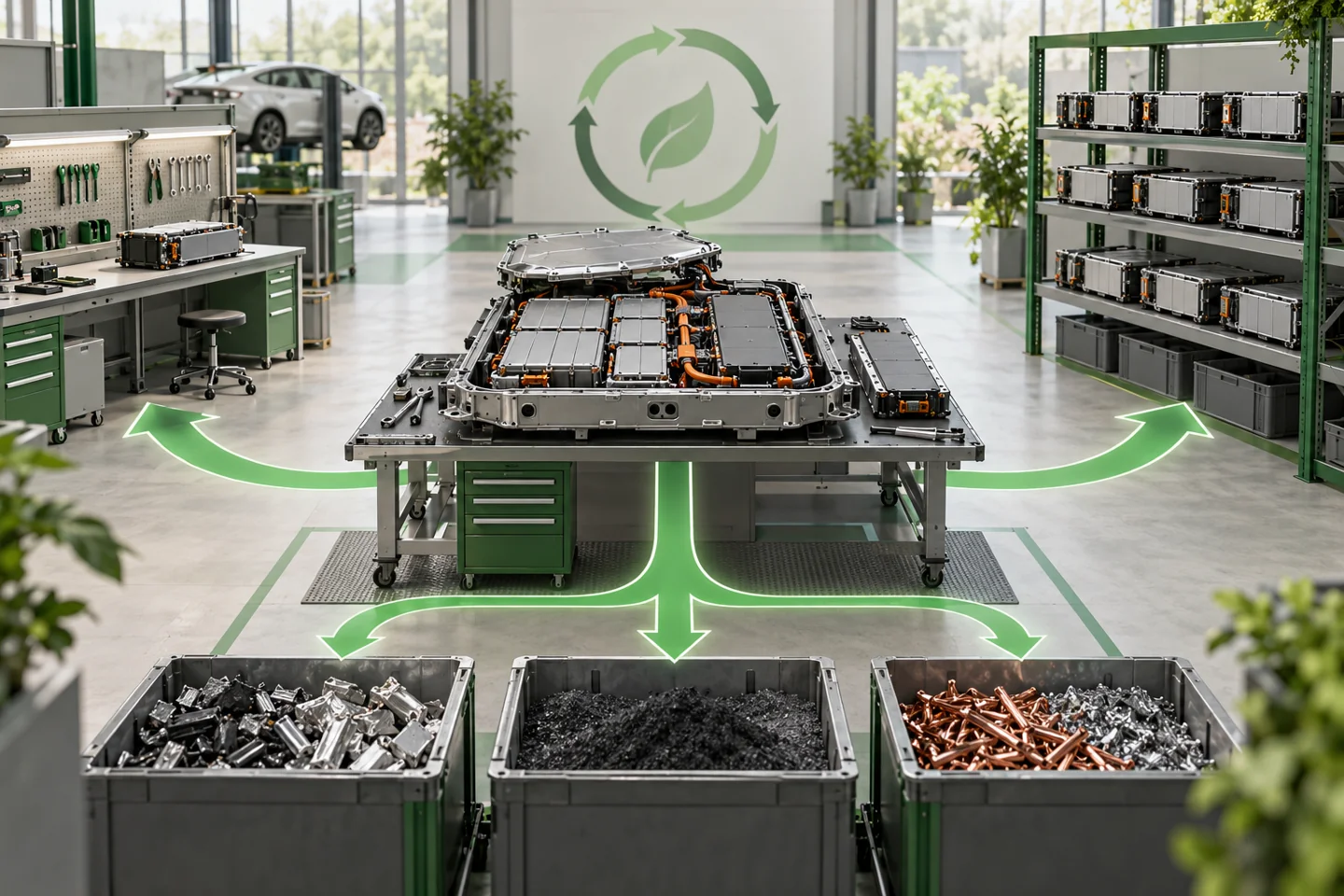
Returned packs differ in condition, history and recovery potential. The team must decide which route is technically suitable and economically justified.
Combine condition evidence, approved procedures and cost information into a reviewed disposition recommendation.
Which recovery route is justified by this pack’s evidence?
Use traceable records, comparable conditions and governing versions.
Decision owner: Remanufacturing and service engineering.
Condition, fault history and required safety assessment
Approved procedures, parts and comparable repair records
Labor, replacement cost, warranty and recovery routes
Apply approved safety and condition assessments through qualified personnel.
Review repair scope, replacement constraints and recovery economics.
Record the chosen route, assumptions and responsible approval.
Eligible procedure and recoverable function
Suitable module or pack replacement
Approved material recovery route
Eligible procedure, parts and evaluation scope
Availability, cost and warranty considerations
Approved recycling route and material-recovery inputs
Based on the original Tesla Battery Lifecycle Intelligence Platform proposal, actual slide(s) 19, 20. This webpage expands that module into an illustrative use case. Examples, data and proposed outcomes are not verified Tesla customer results. Integrations, models and deployment scope require project-specific evaluation.
Start with one problem, the available evidence and a named engineering owner.